

Signup To Our Weekly e-News
"*" indicates required fields
We’ll never share your details with any third party in line with our privacy policy.
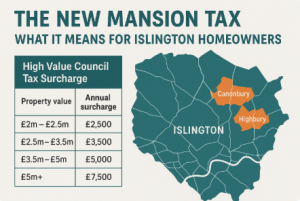 On 26 November 2025, Chancellor Rachel Reeves confirmed one of the most anticipated measures in the Autumn Budget: the introduction of a “Mansion Tax”, officially termed the High Value Council Tax Surcharge (HVCTS). This policy marks a significant shift in property taxation and will have notable implications for homeowners in Islington, where property values frequently exceed the £2 million threshold.
Starting April 2028, owners of residential properties in England valued at £2 million or more (based on 2026 valuations) will pay an annual surcharge on top of their existing council tax. The tax is structured into four bands:
These amounts will be uprated annually by CPI inflation. Importantly, property owners will pay the surcharge, not occupiers, and the revenue will go directly to the Treasury rather than local councils. The government estimates the measure will raise £400 million annually by 2030.
The Mansion Tax aims to address long-standing inequities in the council tax system, which still relies on 1991 property valuations. Currently, a £10 million home in Westminster can pay only twice the council tax of a £400,000 home elsewhere, a disparity the government argues is unfair. By introducing this surcharge, ministers hope to:
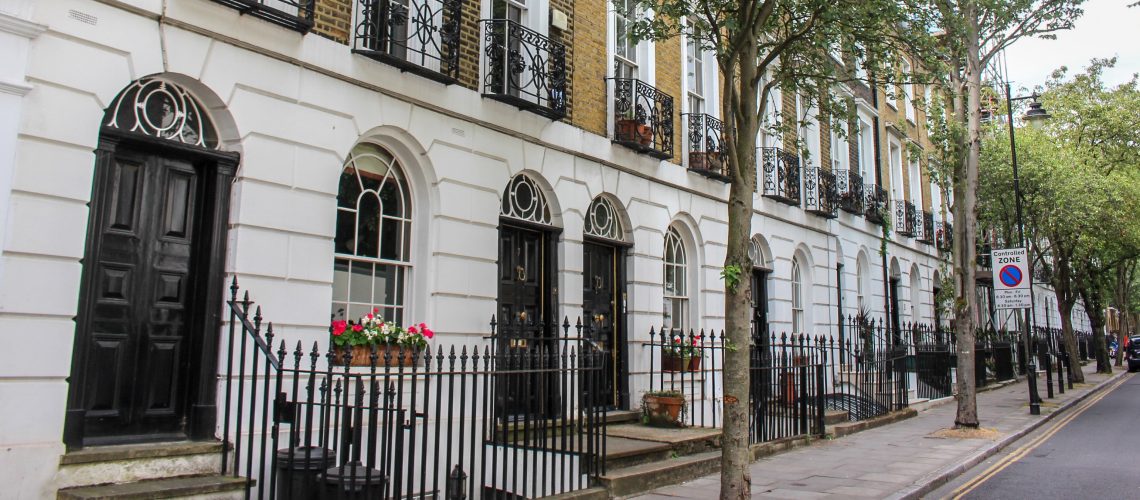
Islington is one of London’s most desirable boroughs, with Victorian terraces, Georgian squares, and luxury apartments commanding premium prices. While the government claims fewer than 1% of properties in England will be affected, the concentration in London tells a different story:
The Mansion Tax represents a policy pivot toward wealth-based taxation, targeting a small but highly visible segment of homeowners. For Islington, where property values have soared over the past two decades, this measure will reshape financial planning for many households. While its fairness objective is clear, the practical implications, valuation disputes, market distortions, and affordability concerns, will dominate the debate in the years ahead.
The Private Wealth team, led by Helen Beach, is here to guide you through the implications of the Mansion Tax and help you plan confidently for the future. Whether you’re assessing your exposure to the new surcharge, reviewing your property ownership structure, or considering long-term estate and succession planning, we offer:
If you or your family are likely to be affected by the Mansion Tax, or if you simply want to understand your options, please get in touch. We are here to provide clear, practical advice to help you stay ahead of the changes.

If you have secured a new role, congratulations! When your new employment contract arrives, remember that it will typically be...

One of the most significant proposals set out in the Employment Rights Bill was to be the introduction of day-one...
"*" indicates required fields
We’ll never share your details with any third party in line with our privacy policy.