

Signup To Our Weekly e-News
"*" indicates required fields
We’ll never share your details with any third party in line with our privacy policy.
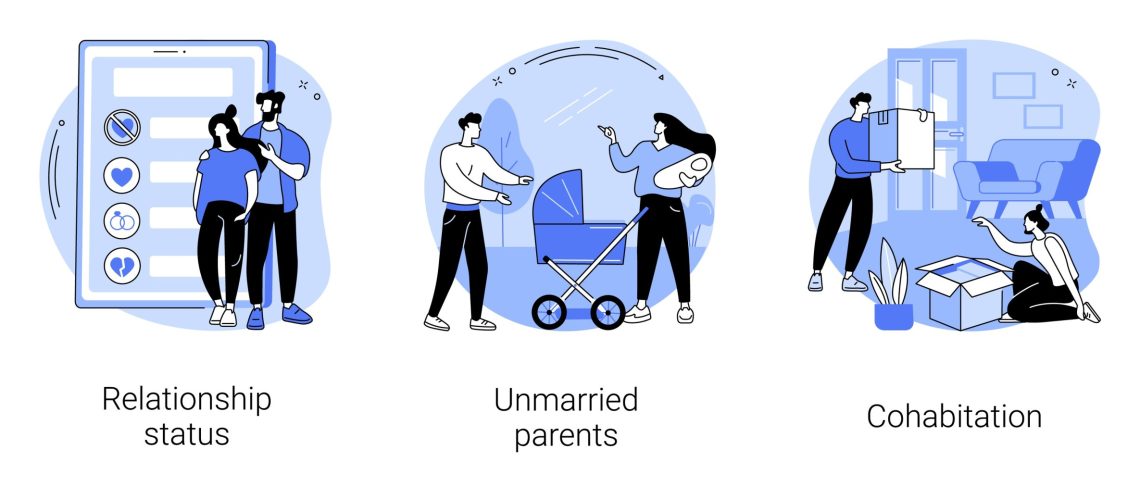
Cohabiting couples are the fastest-growing family type in the UK. According to Office for National Statistics data, the number of cohabiting couples increased from 5.5 million in 2014 to 6.5 million in 2024.
Despite this significant rise, many couples remain unaware that in England and Wales there is no such legal status as a “common law marriage”. No matter how long a couple has lived together, whether they have children, or how financially intertwined their lives may be, cohabiting partners do not acquire the same legal rights as married couples or civil partners. This misconception can leave individuals in a vulnerable position if their relationship breaks down or if their partner dies.
Unlike married couples, cohabiting partners do not automatically have the right to make financial claims against one another following separation. This means they generally cannot claim a share of their partner’s:
Similarly, cohabiting partners do not have automatic inheritance rights if their partner dies without leaving a valid Will.
Where children are involved, a parent may apply to the Child Maintenance Service for child maintenance. In certain circumstances, an application can also be made for housing provision, child maintenance, or lump-sum payments to meet a child’s needs. However, these provisions are primarily intended to benefit the child rather than the parent. In most cases, any financial support or housing arrangements are temporary and will usually end when the youngest child reaches the age of 18 or completes full-time education.
On 5th June 2026, the government opened a long-awaited consultation titled ‘A fairer end to relationships’ with a view to strengthening the financial rights of unmarried couples. The consultation seeks views on three key areas:
While reform is being consider, it does not mean that cohabiting couples will necessarily have the same rights as married couples. The consultation proposes a framework that would provide greater protection while maintaining important distinctions between marriage and cohabitation. The core features of the consultation include:
The consultation closes on 14 August 2026. The Government will then review the responses before deciding whether to proceed with legislative reform. Any proposed changes would need to pass through Parliament before becoming law.
Until there are any changes to the law, cohabiting couples should protect themselves by considering the following:
As the number of cohabiting couples continues to grow, many remain unaware of the limited legal protections available to them. While the Government is considering reform, the law has not yet changed.
Taking advice early can help protect your interests. At Bolt Burdon, our Family Law team can advise on cohabitation agreements and our Private Wealth team can assist with Wills and wider estate planning to help safeguard your partner and family.

On the 9th June 2026 Team BB took on our 3rd London Legal Walk alongside the Lady Chief Justice and...

From April 2027, many families could face unexpected inheritance tax (IHT) bills as pensions become part of an estate for...
"*" indicates required fields
We’ll never share your details with any third party in line with our privacy policy.